

This month we outlined how green initiatives at London King’s Cross were making a significant impact on the station’s sustainability.
They’re just some of the measures we have taken to improve sustainability across the network.
The upgrades at King’s Cross, which took place between 2006 and 2012, included rainwater harvesting, water saving taps, extra insulation and 2,300 square metres of solar panels.
The solar panels were specially designed to integrate with the iconic design of the Grade I listed building and have reduced carbon dioxide emissions at the station by more than 40 tonnes.
本月我们宣布该面板已生成一百万千瓦的电力 - 足以为38个房屋提供全年。这代表了网络轨道的公用事业费用的125,000英镑。亚搏彩票软件官网
Solar panels at London King's Cross and Blackfriars stations


这些举措帮助我们实现了建筑研究机构环境评估方法优异的评级。
It’s the second-highest rating awarded by industry body the Building Research Establishment’s method of assessing, rating, and certifying the sustainability of buildings.
Network Rail的路线董事总经理Rob McIntosh表示,该举措是“在减少亚搏彩票软件官网碳足迹和储蓄美国金钱方面支付实际股息”。
He said: “We now want to encourage our retail tenants, contractors and station users to do their bit to cut down on waste, increase recycling and be more environmentally friendly.”
Elsewhere in the capital, the redevelopedBlackfriars station, which opened in 2012,features the world’s largest solar bridgewith over 4,400 photovoltaic panels – enough to cover 23 tennis courts.
The roof provides up to half of the station’s energy – enough to heat almost 80,000 cups of tea a day. It also reduces the station’s CO2 emissions by an estimated 511 tonnes per year – equivalent to about 89,000 average car journeys.
目标
与此同时,我们在英国最大和最繁忙的铁路站解决了三个重要的环境问题。作为一家公司,我们将94%的废物从垃圾填埋场转移。我们现在想使用我们作为英国最大的零售业主的地位,以鼓励在管理站内采用更多的绿色举措,为我们数百万站用户提供利益。
We aim to:
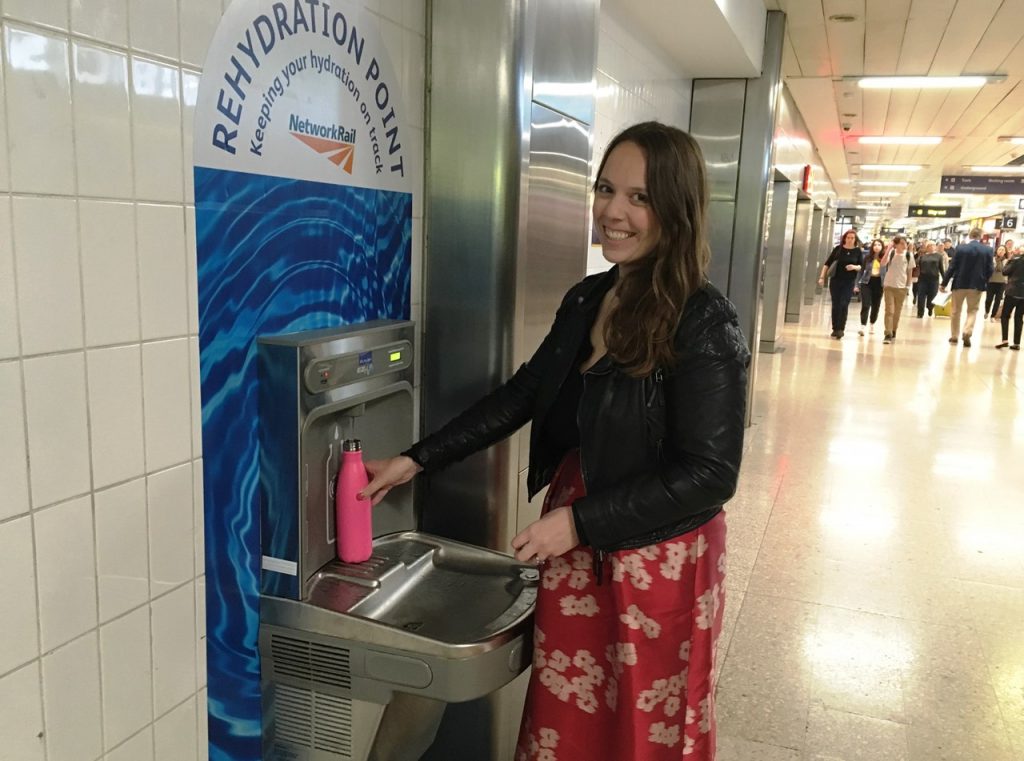
- Ban retailers from supplying plastic cutlery and cups in managed stations by the end of 2020
- Implement a coffee cup recycling scheme for managed stations by the end of 2020.
These goals also complement our launch in February this year of free water fountains at managed stations. Each location saves up to 1,000 plastic bottles each week.