

Archivist Vicky Stretch introduces the wealth of historical information available to help run the railway – and how we look after it.
Today’s railway relies on big data, live feeds, 3D modelling, online tools, instant access and GPS.
The railway produces a vast amount of digital information – all in zeros and ones, stored on cloud-based servers and transmitted down high-speed internet cable to handheld devices.
It has always produced vast quantities of information. In the past, this was recorded on handmade paper and parchment with wax seals, and these documents still have an important part to play in today’s 21st-century railway.
Records management for the digital age
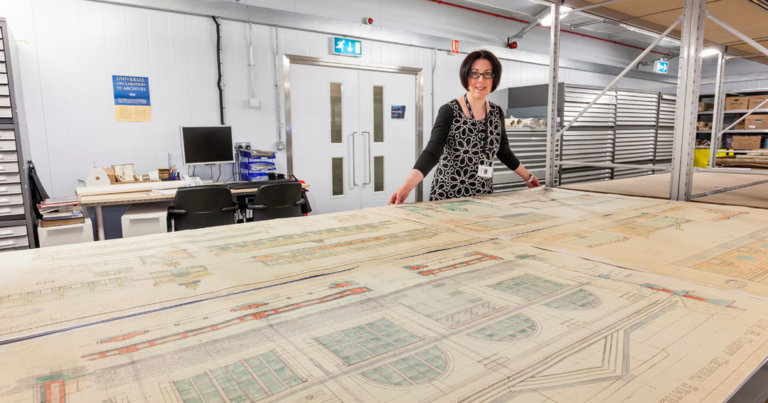
The home of this railway record is Network Rail’s National Records Centre, where records are kept safe and secure until needed. Although it is a state of the art archive repository on the outskirts of York, it is not a museum to the railway’s hardcopy information age.
Here we manage the handover and handback of millions of digital records relating to the railway infrastructure every year. We support colleagues using digital content management systems for the management of corporate records. We are the repository of data sets that power new信令systems and we issue secure access codes forERTMS.
We can also take our papers and parchments and digitally scan them – turning them into ones and zeros for instant access to information and collaboration between colleagues.
Beginnings
The National Records Centre opened in 2008 and is the amalgamation of 11 regional record centres that grew up through the original railway companies, through the British Rail regions and the Railtrack Zones.
将区域中心移动到国家记录中心的决定是由改进我们的记录保存的储存设施以及简化流程,以便简单,及时地获取需要它的文档。
It was at this point that Network Rail decided to establish an archivist role and I joined the organisation.
Collections
The National Records Group manages four distinct collections: engineering; signalling; the railway registry of deeds and theCorporate Archive.
The signalling collection is primarily digital and focuses very much on what is there in operation today. In terms of historical information there is very little that is kept – unless asignal box正在关闭,然后我们将保留与框的最后一个配置有关的图纸。
The civil engineering collection is very different and is much more like a jigsaw. It dates back to the 19th century and the earliest days of the railway. Drawings can be pieced together to tell the story of the development of the infrastructure; a particular bridge, station or tunnel.
Railway bridges, tunnels and viaducts today
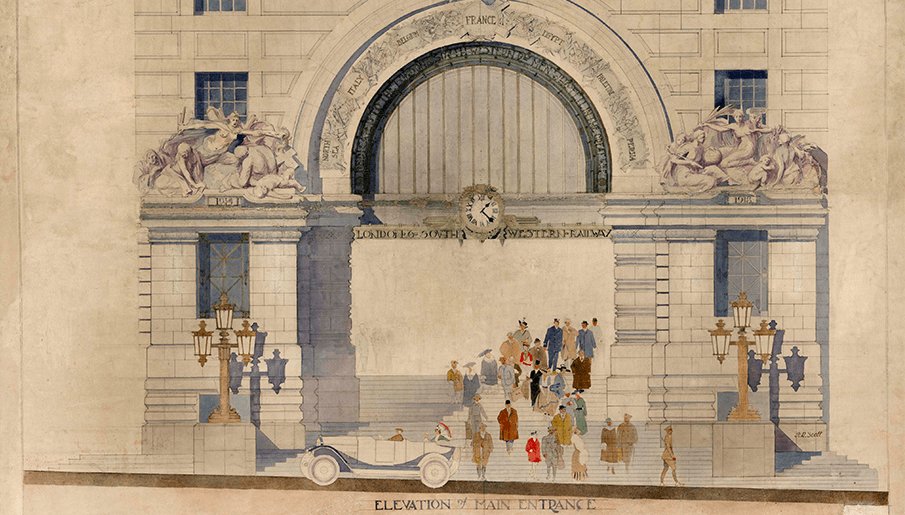
It is a collection of ‘as built’ drawings and proposed drawings that together show the ideas, the complexity, the detailed construction and the architectural design of the most iconic railway structures right down to the tiniest culvert and the rivets in girders.
注册表的行为是为侦探我设计的n all of us. Deed packets are often arranged in original company order, so knowing your railway company family tree can be crucial in tracking down that one agreement or conveyance that will solve the puzzle.
The collection is primarily 19th century – the railway company bought the land and it often hasn’t changed hands since – but pre-title documents inherited by the railway company when they bought the land means the collection actually dates back to the 16th century and has a rich seam of royalty, dukes, duchesses, prime ministers and prominent figures from history represented throughout it.
The majority of railway land is unregistered, so this registry of deeds proves our ownership of the operational railway estate. It also protects our rights, assigns responsibility for liabilities and is crucial in just about every part of maintaining, operating and developing the railway.
If anything was ever amiss at the National Records Centre this is the collection we would get out first. Although I have to say we do have state of the art fire detection and suppression systems, as well as temperature and humidity controls, so the risk is well mitigated!
The Network Rail Corporate Archive is primarily digital and is the permanent record of the company since it was established in 2002. We are mandated to keep a modern business archive because key business records – board and executive minutes, major project files, operational records and communication materials for example – are all designated under the Railway Heritage Act.
Our ‘engineering inheritance’
Alongside this, I manage an archive of what I call our ‘engineering inheritance’. This is a collection of selected drawings that represent the most important historical developments in railway infrastructure engineering, the mosticonic structures and stationsand the mosteminent engineers.
We will take a station like London Waterloo for example and we will examine its history to identify the key points in the station’s development. We will then retrieve all the drawings for the station – there could well be thousands – and identify the key drawings that tell the story. We then take these drawings into the engineering inheritance collection for the permanent Corporate Archive.
没有选择的那些图纸 - 例如,1983年的厕所小隔间 - 仍然是由网络轨道保留的,因为它们可能包含有关该示例中排水的重要信息,但它们并不撒上允许它们在其中有一个地方的魔法亚搏彩票软件官网历史性收藏。
然后节省了绘图 - 我们收到了慷慨的补助金Railway Heritage Trustthat contributes to this work – and then they are photographed so they can be used in different ways to support the business.
Why do we need historical information?
每一天,我们管理和在约克郊区的仓库中管理和保持留在约克的仓库中的历史信息挽救了我们,因此纳税人,大量的时间和金钱。
它证明了我们的所有权,它使我们能够断言我们的权利,但指出了我们拥有它们的义务。
Historical documentation helps us to make the railwayxinyabo体育 ;它使我们能够清楚地对活动作出反应,并通知长期规划和major projects.
It helps us to be more open about the challenges we face in delivering thebiggest investment in the railway since Victorian times.
Externally, historical documentation helps us support our stakeholders with their interest in the railway infrastructure, and it helps individuals and groups explore the elements of railway infrastructure for their own knowledge and learning.
It enhances our communication with people around the world, engaging them in the history of the railway in Britain.
那么,虽然Britain runs on rail, it’s clear that the railway runs very much on historical information.
找到更多
Open data feeds from the railway
External links