Background:
虽然报告、捕获和监控关闭呼叫被广泛用于基于站点的活动,但它们目前没有有效地用于设计活动。提出的密切联系的次数与我们项目中发生的事故数量之间存在直接关系,这些事故也应转化为开发和设计阶段。
了解设计阶段发生的危害和风险将使我们能够采取直接措施,在未来降低危害和风险,从而提高所有设计的安全性,并随后减少现场活动中发生的事件和事故。
应该指出的是,这不是批评个人或公司的手段,而是用来促进在捕捉问题和分享未来设计活动经验教训方面的积极行为。
定义:
Hazard or injury
- A design condition or situation (including errors and omissions) which could have been identified earlier in the design review/verification process.
- 已签署并随后发现有可能对人或环境或财产造成伤害或伤害的东西;
- A design which harbours a latent hazard which has the potential to cause harm or injury to people or the environment. This may be the result of design assumptions or option decision which have not been adequately tested, managed or communicated.
Undue stress
- 一组参数,使项目组成员承受足够的压力,从而危及或损害他们的健康或损害他们有效履行职责的能力;这可能是但不一定是按时交付的压力的结果。但是,也有其他可能导致应力的原因,这些原因可能是设计上的,也可能是个别原因造成的,例如必须设计到最小间隙。
去吧od practice
- 它还允许捕捉良好和/或新颖实践的观察结果。
如何筹集DCC?
You are now able to raise a DesignAnything that has the potential to cause harm or damage
This includes the potential to:
•Harm a person including minor, major injuries, and fatalities
•Harm the environment and/or protected species
•Damage railway infrastructure, plant, vehicles, tools and equipment.
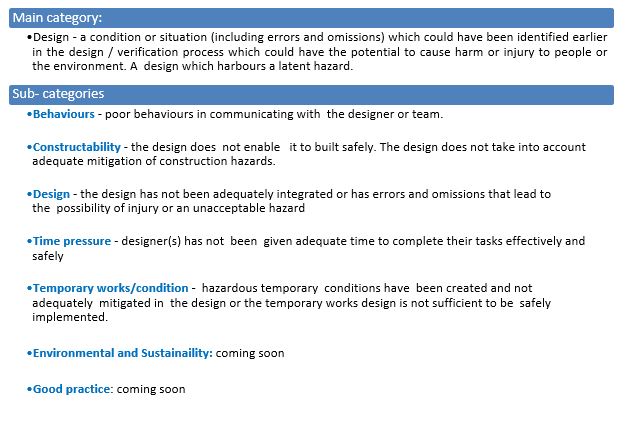
(Not to be Confused with NEAR MISS which specifically involves Trains and OTP/OTM)" class="glossaryLink ">Close Call(DCC)并选择子类别;行为、可施工性、设计、时间压力或临时工程/条件。请确保使用子类别,因为这将有助于趋势分析。
与设计结束调用关联的类别: